 Numeline
Guanciale recall: 1,513 lbs of pork jowl, and one lot code
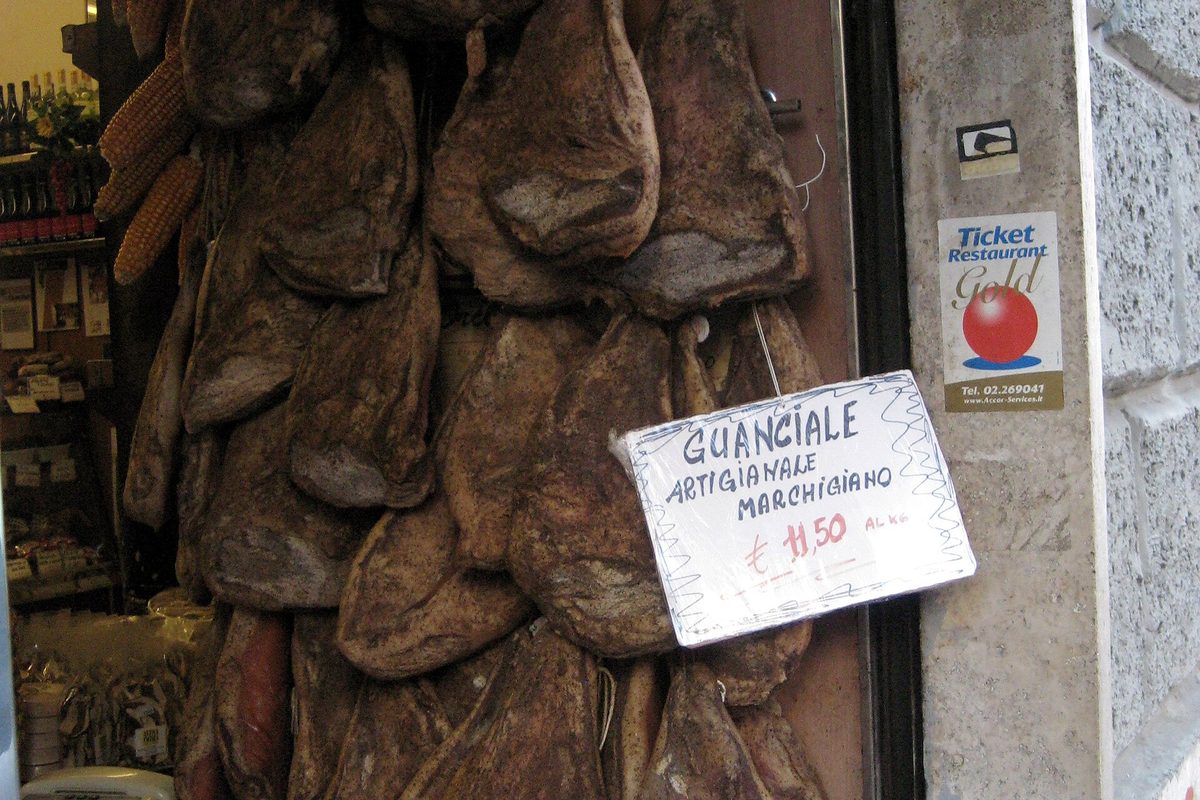
On September 6, 2026, the USDA’s Food Safety and Inspection Service announced a recall of about 1,513 pounds of imported Italian guanciale — dry-cured pork jowl — that may be contaminated with Listeria monocytogenes. It carries Class I, the agency’s highest risk category. No illnesses have been reported. And unlike most recalls we write about, this one gives you exactly what you need: a single lot number.
What to check on the package
Lot code: 263311US — the same on every recalled item.
Best if used by: 05.16.27
Establishment number: IT 1937 L CE, inside the Italian mark of inspection or printed on the case label.
Labels: “Prime Line Distributors, Inc. Guanciale Pork Jowl Product of Italy”, “Guanciale Pork Jowl Product of Italy” (some also marked DOK Guanciale), and “Ferrarini Guanciale Dry-Cured Pork Jowl”.
Recall number: 019-020-2026.
Who recalled it, and where it went
Two firms are recalling: Prime Line Distributors, Inc. of Fort Lauderdale, Florida, and Ferrarini USA, Inc. of Hoboken, New Jersey. The guanciale was produced at establishment 1937L, Bome SRL, in Italy on May 21, 2026, and imported into the United States on various dates in July 2026.
The Prime Line items went to food service and retail locations in Florida. The Ferrarini items went to distributors and food service locations in California, Florida, Idaho, Illinois, Michigan, New Jersey, New York and Texas.
That distribution pattern matters for who is most exposed. This is largely a food service recall: much of the product went to restaurants and distributors rather than supermarket shelves. If you have eaten carbonara, amatriciana or gricia in the last few weeks, the guanciale in it came from somewhere — and FSIS says explicitly that it is concerned product may still be sitting in food service and retail refrigerators and freezers.
How it was caught
The contamination was found during routine import reinspection testing, when a product sample confirmed positive for Listeria monocytogenes. No outbreak triggered this recall, and no confirmed illnesses are linked to it.
It is worth pausing on that, because most of the recalls we cover run the other way: people get sick, investigators work backwards, and the recall arrives after the harm. Here the border-testing system did the thing it exists to do. A Class I designation reflects the seriousness of the hazard, not the existence of a body count.
Why ready-to-eat changes the calculation
Guanciale is classified as a ready-to-eat product. That is the crux of the risk. Cooking to 165 °F (74 °C) reliably destroys Listeria, and most Roman pasta dishes render guanciale in a hot pan well past that. But ready-to-eat means it can also be sliced onto a board and eaten as-is, and it means the packet has been handled as something that needs no further cooking.
Listeria also survives refrigeration and spreads readily to knives, boards and fridge surfaces. So even for a cook who always renders it, the recalled pack in the drawer is worth removing rather than finishing.
Listeriosis mainly threatens older adults, people with weakened immune systems, and pregnant women and their newborns. Symptoms include fever, muscle aches, headache, stiff neck, confusion and loss of balance, sometimes preceded by diarrhea. In pregnancy, infection can cause miscarriage, stillbirth or premature delivery. Symptoms can appear up to two months after eating contaminated food, which is why an old package deserves attention now.
The detail worth noticing: one lot number
Every product in this recall — four listings, two companies, three label variants — carries the same code: 263311US. One string. You look at the packet, you read one field, you have your answer.
That is rarer than it should be. We recently went through the 1,000 most recent FDA food enforcement records and found lot codes published as free-form prose, brands that never appear in the record at all, and a rice recall whose lot codes sat inside a compound label that reads as a single field. Against that, an FSIS notice giving one lot, one best-by date and one establishment number is close to exemplary.
One small caveat for anyone cross-referencing databases: the machine-readable version of this recall lists Mississippi among the states, while the published announcement says Michigan. The announcement text is the one to trust.
What to do
Look for LOT: 263311US with BEST IF USE BY 05.16.27. If it matches, do not eat it — throw it away or return it to the place of purchase. Wash any surface, board or knife the product touched, since Listeria persists in cold environments. Restaurants and retailers are urged not to serve or sell it. If you are pregnant, over 65, or immunocompromised and have had flu-like symptoms within two months of eating guanciale, contact a healthcare provider and mention the exposure. Questions: Prime Line, 954-925-4500; Ferrarini USA, 818-256-1622; or the USDA Meat and Poultry Hotline at 888-674-6854.
Sources
- USDA FSIS — Recall 019-020-2026, September 6, 2026: Prime Line Distributors, Inc. and Ferrarini USA, Inc. recall imported ready-to-eat pork guanciale products due to possible Listeria contamination; Class I, approximately 1,513 pounds: fsis.usda.gov
- USDA FSIS — Recall classifications and what Class I means: fsis.usda.gov/recalls
- CDC — Listeria (listeriosis): symptoms, people at higher risk, prevention: cdc.gov/listeria
Recall details — products, lot code, distribution and classification — come from the U.S. Department of Agriculture’s Food Safety and Inspection Service. This article is independent consumer information; it is not affiliated with the USDA or the companies named, whose names are used for identification purposes only. It is not medical advice.
Know before you eat
Numeline scans a product and checks it against official FDA and USDA recalls — and flags allergens and foods to avoid for each member of your household. Free on iOS and Android.